
Contextual Targeting in DOOH: Why Environment, Moment, and Content Drive Real Impact

For a long time, targeting conversations have revolved around one central question: Who are you trying to reach?
That hasn’t changed, and it shouldn’t. Today’s DOOH campaigns can reach incredibly specific audiences, from finance decision-makers in major metros to high-income consumers in luxury residential buildings. That level of precision is a core strength of the channel, not a limitation.
What has changed is what separates a campaign that simply delivers impressions from one that actually drives impact.
It’s not just about who sees your ad. It’s about what surrounds that moment: where they are, what they’re doing, and what they’re paying attention to when your message appears.
That’s the role contextual targeting plays in DOOH today. Not as a replacement for audience targeting, but as the layer that makes it more effective.
Context Is What Turns Targeting Into Relevance
There’s a tendency to treat context as secondary; something you think about after audience and inventory are locked in. In practice, it works the other way around.
When you understand the environment your audience moves through every day, patterns start to emerge. Office buildings aren’t just locations; they’re ecosystems of repeat behavior.
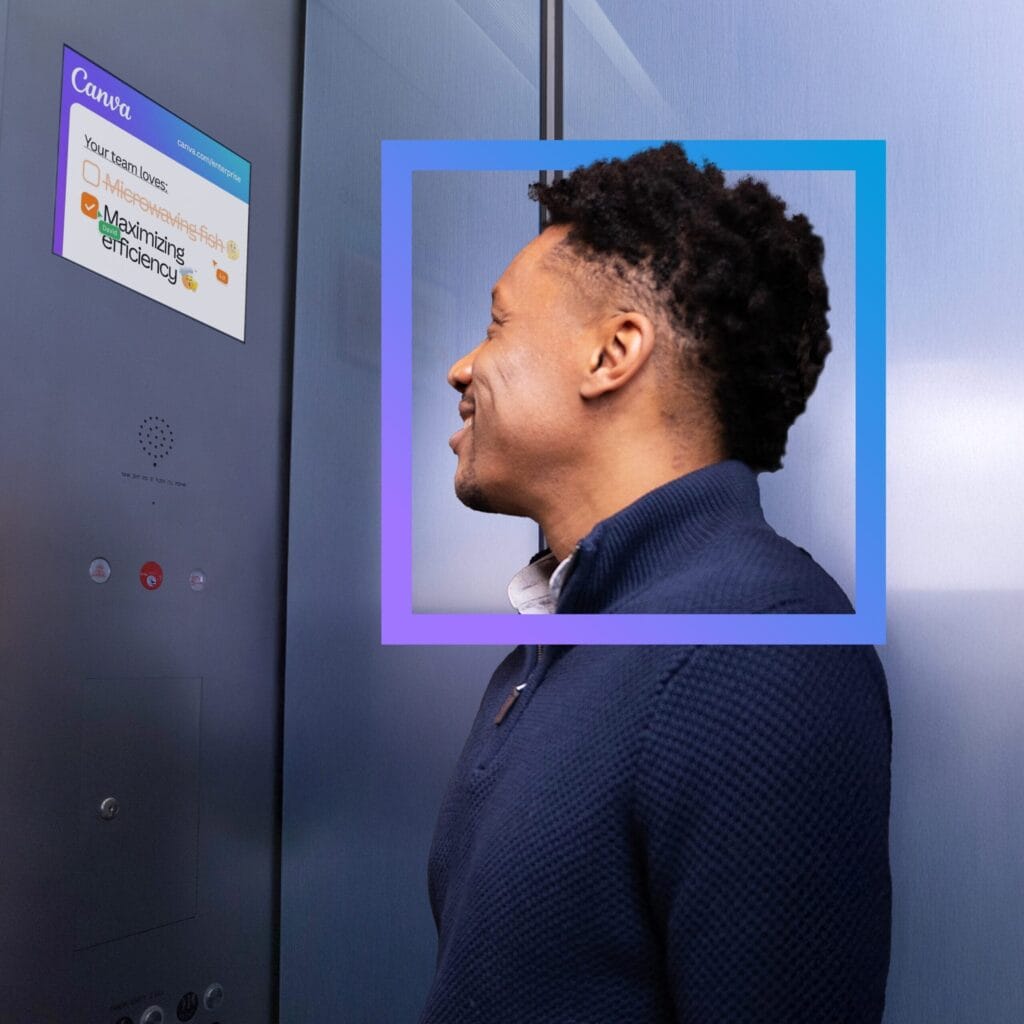
People arrive at predictable times, move through the same shared spaces, and engage with screens during moments of natural pause: waiting for an elevator, walking through a lobby, transitioning between meetings.
Those moments matter because they come with attention.
And in premium building environments, that attention is anchored by something else: content people actually choose to watch. News, markets, weather, lifestyle programming—delivered in a way that’s designed to inform and engage, not just fill space.
That combination (precise audience targeting, consistent environments, and curated content) creates a very different media experience. One where your message doesn’t have to fight as hard to land, because it’s already situated in a moment that makes sense.
What “Contextual Targeting” Really Means in Practice
In simple terms, contextual targeting is about aligning your message with the situation your audience is in when they see it. But in DOOH, that situation isn’t defined by just one variable.
Yes, venue matters. An office lobby carries a different mindset than a residential elevator or a fitness center. Time matters too. Morning routines feel different from end-of-day transitions.
But the more meaningful layer is the moment itself. Are people starting their day and scanning for information? Are they in between tasks, open to something new? Are they thinking about personal priorities as they head home?
And then there’s the layer that often gets overlooked: the content surrounding your ad.
In environments like Captivate’s network, ads don’t run in isolation. They sit within a curated stream of programming that audiences engage with daily. That means your creative can align directly with what someone is already paying attention to, whether that’s business news, market activity, or wellness content.
That alignment is subtle, but it’s powerful. It changes how the message feels.
A finance brand alongside live market updates doesn’t just reach the right audience; it reaches them in a moment where that message is already top of mind. A healthcare brand aligned with wellness content feels less like an interruption and more like a continuation of what the viewer is already consuming.
That’s not just contextual placement. It’s contextual relevance.

Why Environment Still Carries So Much Weight
Not every impression has the same value, and in DOOH, the difference often comes down to environment.
In high-quality office and residential buildings, you’re not just reaching people, but reaching them in places tied to routine and decision-making. These are environments where audiences return daily, where dwell time is built in, and where the overall experience is designed to feel premium and trustworthy.
That has a direct impact on how advertising performs.
A message delivered in a chaotic, high-noise setting has to work harder to break through. In a controlled, content-driven environment, it has the opposite advantage: it enters a space where attention already exists.
That’s why venue selection isn’t just a planning detail. It’s a strategic decision that shapes how your campaign is received from the start.
Moving Beyond Time to Focus on the Moment
Dayparting still plays a role in DOOH planning, but on its own, it’s a blunt tool.
Knowing that an ad runs in the morning doesn’t tell you much unless you understand what that morning looks like for your audience. Are they rushing? Waiting? Checking in on the day ahead?
In environments with meaningful dwell time, like elevators and lobbies, those distinctions become more important. These aren’t fleeting impressions; they’re moments where people have a few seconds (or more) to actually take something in.
When creative is built with that in mind—clear, concise, and aligned with the pace of the moment—it doesn’t feel forced. It fits naturally into the experience.
Content Alignment Is Where Context Becomes Strategy
If there’s one area where DOOH is still underleveraged, it’s content alignment.
On premium networks, content isn’t incidental. It’s professionally curated, consistently updated, and central to why audiences pay attention in the first place. That creates an opportunity most channels can’t replicate: the ability to align advertising with trusted, relevant programming.
And that alignment compounds everything else.
It reinforces relevance because the message connects to what’s already being viewed. It builds trust because the surrounding content carries credibility. And it improves recall because the context gives the message something to anchor to.
This is where campaigns start to feel less like placements and more like part of a cohesive experience.
A More Effective Way to Plan DOOH Campaigns
The strongest DOOH strategies today don’t rely on a single targeting method. They’re built by layering.
Audience targeting ensures you’re reaching the right people. Contextual targeting through venue, moment, and content ensures you’re reaching them in the right way.
When those elements work together, campaigns become more efficient and more impactful. You’re not just delivering impressions; you’re delivering messages in environments where they’re more likely to resonate and be remembered.
Where Captivate Comes In
This is exactly the kind of environment Captivate is designed to deliver.
Across thousands of screens in premium office and residential buildings, Captivate connects brands with high-value audiences in moments of real attention through a combination of advanced targeting, controlled environments, and professionally curated content.
That last piece is critical. Because when your creative aligns with the content people are already engaging with, it doesn’t feel disruptive. It feels relevant, timely, and intentional.
It’s how campaigns move from being seen to actually being understood.
Ready to Make Context Work Harder for Your Campaigns?
If you’re planning your next DOOH campaign, it’s worth thinking beyond audience targeting alone.
The real opportunity lies in how you combine it with context: choosing the right environments, aligning with the right moments, and integrating with the right content.
That’s where performance starts to shift, and it’s where Captivate can help you get more out of every impression.
Get in touch to see how contextual, content-aligned DOOH can elevate your next campaign.