
Inside Captivate RESIDENTIAL: Where Premium Audiences Live
Think about the last thing your household purchased – big or small. Odds are that decision was influenced or purchased at home – over dinner, on the couch, chatting with your family, or in the elevator on the way out the door. That’s the moment Captivate’s Residential network was built for. Enclosed is an inside look at the buildings, the audience, scale and why reaching consumers at home might be the most influential touchpoint in your plan.
What is Captivate’s RESIDENTIAL Network?
Captivate’s Residential network reaches consumers where most buying decisions start and end: at home. Video-first screens in the elevators, lobbies, package pick-up hubs and shared spaces of luxury residential buildings put brands in front of residents every day, in one of the places with the longest dwell time and the most influence on everyday purchases.
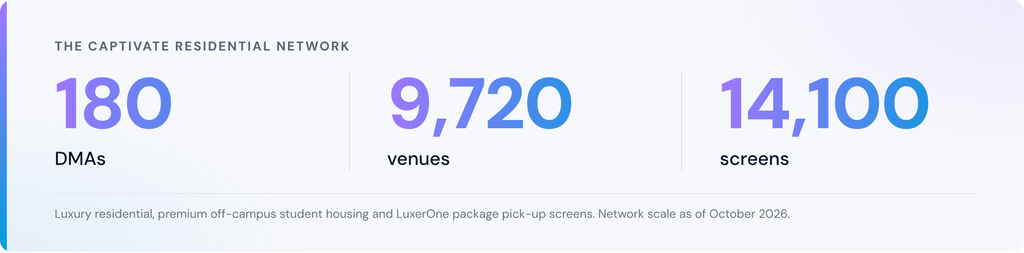
The network consists of 14K screens across nearly 10K luxury residential and premium off-campus student housing properties in 180 DMAs. Along with Captivate’s Office network brands connect with 8.7M households with buying power.
Why Advertise on the Captivate RESIDENTIAL Network?
Many consumer journeys begin and end at home, making the moments before residents head out and after they return some of the most valuable opportunities for advertisers. Captivate Residential extends a brand’s reach into luxury residential properties, connecting with affluent consumers in a high-attention environment as they plan their day, build shopping lists, weigh options, make purchases, choose where to dine, book travel, and unwind at home. By adding impactful touchpoints at both ends of the day, brands can reinforce messaging, increase frequency among premium audiences, and stay top of mind throughout the path to purchase, helping move consumers from consideration to conversion when decisions are actively being made.
How Will Advertising on Captivate RESIDENTIAL Help My Brand?
Reaching consumers at home gives brands a powerful advantage. Captivate Residential delivers meaningful touchpoints throughout the day, engaging affluent audiences with strong spending power in an environment where purchase decisions are frequently researched, considered, and completed. The result is a unique opportunity to build scale, reach consistent spenders, and drive influence where both online and in-store purchases are most likely to happen.
1. Add Scale at Critical Moments Along the Consumer Journey
Residents pass the screens multiple times a day: heading out in the morning, coming home in the evening, picking up a delivery or meeting friends in the lobby. That repeated, daily exposure adds incremental reach and frequency at critical decision-making moments.
Captivate’s Residential network works as a complement to your existing plan by reinforcing messages at a vital time and place that boosts impact of social, digital, CTV, retail media consumers will encounter.
A streaming launch running on CTV and social, for example, can use the lobby screen to remind residents about the premiere on the night it drops, right before they settle in to watch.
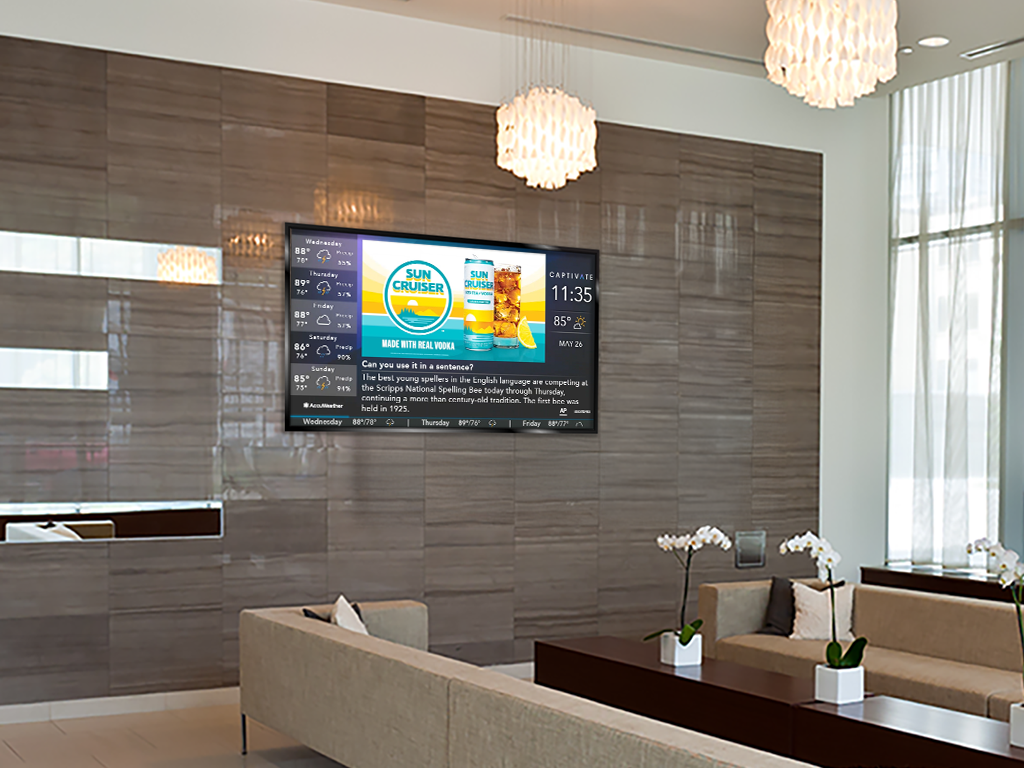
Takeaway: Residential adds repeat exposure at critical decision-making moments along the consumer journey.
2. Everyday Consumers with Strong, Consistent Spending Habits
Luxury residential buildings are home to affluent renters and owners with disposable income. They don’t just make the occasional big purchase; they make steady, repeat decisions about groceries, meal delivery, beauty, wellness, travel and entertainment every week.
That consistency is what makes them valuable. A CPG brand that wins a spot in this household’s weekly grocery order, or a food delivery app that becomes the default on busy weeknights, earns revenue again and again.
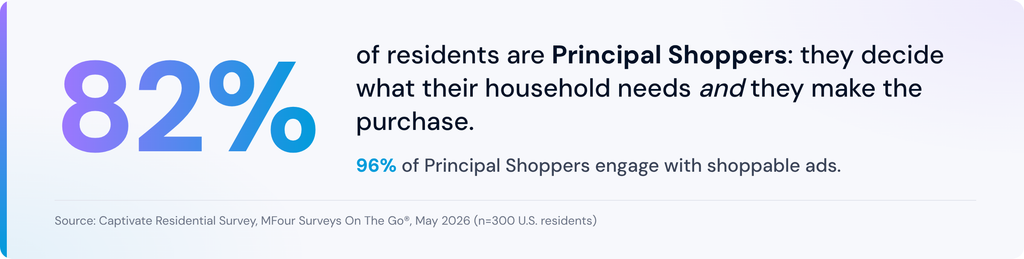
Takeaway: You’re reaching the people who decide what their household buys, week after week. 82% of residents are Principal Shoppers, meaning they both decide and buy and 96% of principal shoppers engage with shoppable ads. Source: Captivate Residential Survey, MFour Surveys On The Go®, Apr–May 2026 (n=300 U.S. residents per study).
3. Proximity to Purchase Impacts In-Store and Online Shopping
Luxury residential environments place brands closer to the moments when consumers are ready to buy. It is where shopping lists are written and online carts get filled. Captivate Residential reaches residents in the minutes before they head out to the store, or before they open a shopping app upstairs.
In-store shopping is also making a comeback. 59% of residents shifted more of their shopping in-store over the past year, and all 12 categories surveyed moved toward in-store. Today, 70% shop mostly in-store for groceries, along with 71% for prescriptions and 68% for alcohol. That means plenty of trips out the door, past the lobby screen, on the way to the store.
Most properties are in top DMAs in busy, urban centers within walking distance of retail corridors. Messages delivered as shoppers head out can turn into a visit to the store down the block. When residents return home after a long day, Captivate Residential inspires as they settle in to browse and purchase online. Once those packages arrive, advertising on package pick-up screens (more on those below) reach shoppers at the exact moment their last order arrives. And close to home is where people like to shop: consumers are 3x more likely to shop for holiday gifts near home than near the office (33% vs. 11%).
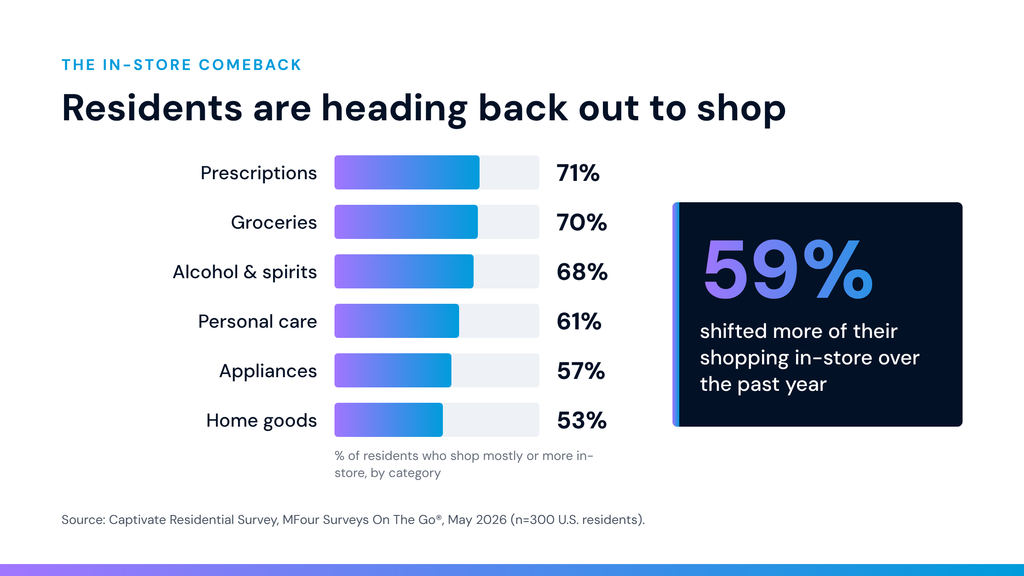
Takeaway: Stay top of mind when purchase intent is high to influence both in-store visits and online conversions.
What Buildings Are Included in the Captivate RESIDENTIAL Network?
Not every residential community is the same. The Captivate Residential network consists of premium living environments, including luxury apartment buildings, high-end condominiums, and student housing communities. Together, these properties provide brands with access to engaged residents in trusted, high-quality environments where daily routines, purchase decisions, and lifestyle choices take shape.
Luxury Residential
The core of the network is upscale, professionally managed buildings: luxury high-rise towers, mid-rise and garden-style communities, condo and boutique residences, and mixed-use developments that combine residential with retail, office and hotel space. The portfolio includes sought-after addresses like 111 Varick, Sky, 130 William, 8 East Huron and The Hub on Causeway, along with communities like Oskar and Paloma. Across the network, properties are owned and operated by some of the largest names in real estate, including Brookfield Properties, Equity Apartments, Moinian, BXP, SJP Properties and Nelson Management Group.






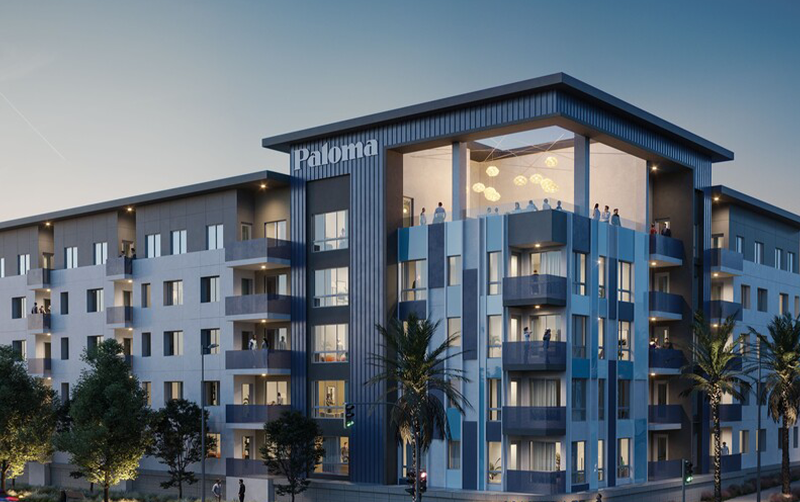
Who lives here: affluent owners and renters with disposable income. Many of these buildings sit in or near urban centers, within walking distance of shopping, dining and entertainment. Residents of mixed-use developments may have a grocery store, gym or restaurant in the same complex.
Why it matters for advertisers: these residents are already out and about in high-spend neighborhoods. A screen in their lobby is often a block or two from where they’ll spend money that day.
- Ideal for: retail and fashion, dining and QSR, beauty and wellness, financial services, travel, auto
- Example: a restaurant group promoting a new location can reach residents of nearby buildings in the evenings, right when they’re deciding where to eat.
Student Housing
The Student Housing network consists of premium off-campus residential properties located right next to campus and close to the shopping, dining and entertainment hubs of college life. Properties include Sterling Arbor BLU at the University of Michigan, Westmar Lofts at Georgia Tech, Park West at Texas A&M and more.
96 DMAs · 310 venues · 495 screens




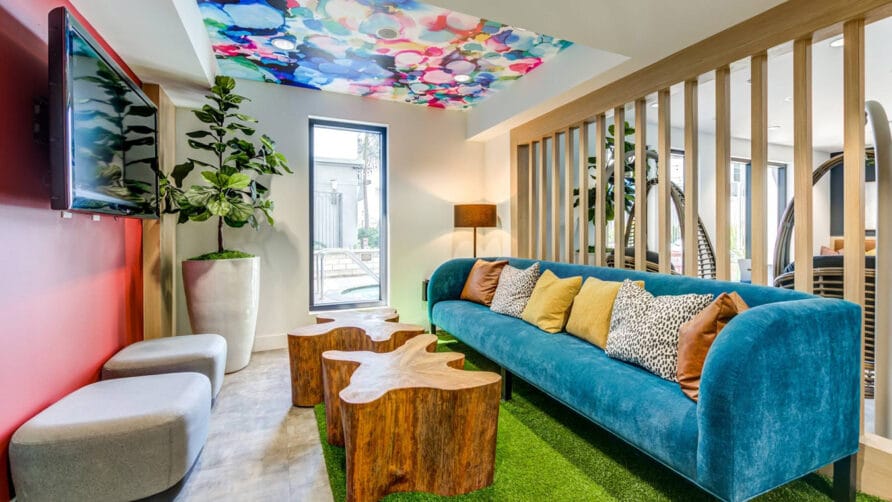

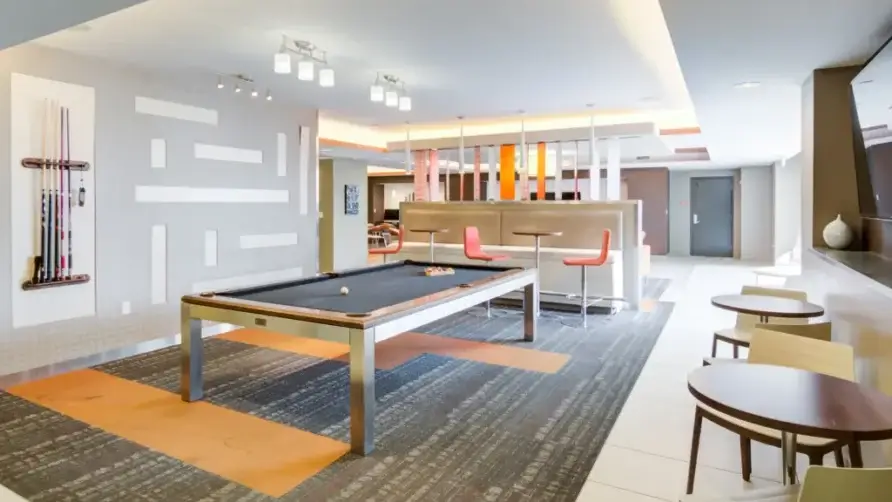
Who lives here: young consumers in a formative stage of life and choosing brands on their own for the first time, from the bank they use to the snacks they buy to the streaming services they subscribe to.
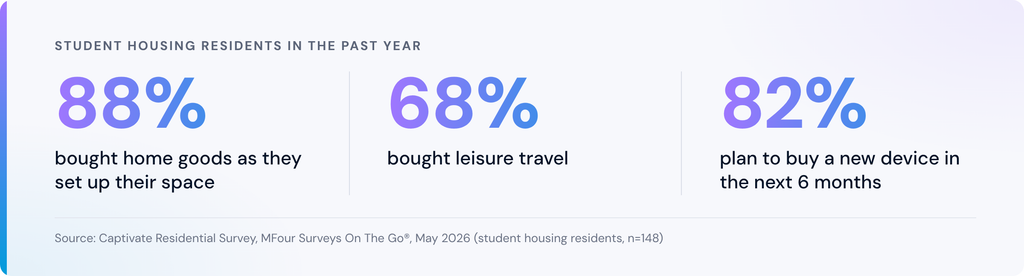
Why it matters for advertisers: this is the moment brand loyalty is formed. A brand that becomes a student’s go-to now can stay in their cart for years after graduation. And they’re active spenders: 88% bought home goods in the past year as they set up their space (47% three or more times), 68% booked trips, and 82% plan to buy new tech in the next six months. Nearly half of student Principal Shoppers (45%) spend $50+ a month on restaurant delivery.
- Ideal for: CPG, beverage, food delivery, telecom and banking, entertainment and streaming, apparel
- Example: a food delivery app can run daypart-specific creative to drive orders from local restaurants from morning acai bowls, to afternoon coffee runs to late-night pizza to spark ideas and build routines.
Package Pick-Up Lockers
Online shopping has made the package room one of the busiest spaces in any residential building. Through Captivate’s partnership with LuxerOne, brands can advertise on touch screens at package pick-up locations, reaching residents at the exact moment they’re collecting their latest purchase.
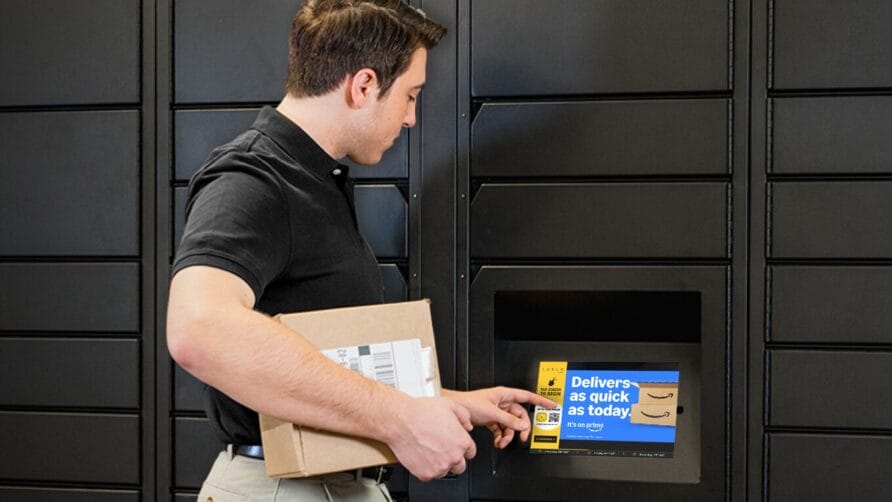
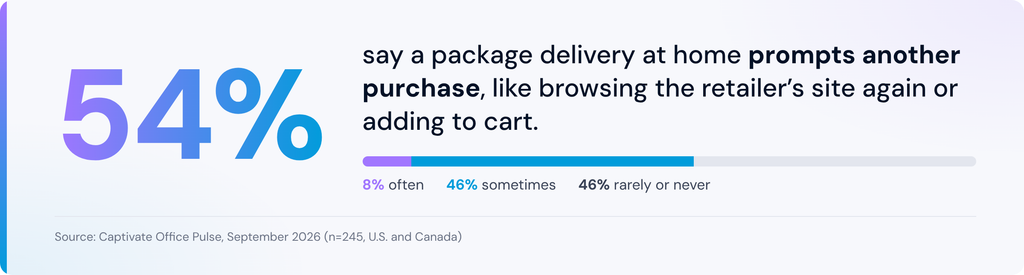
Why these screens matter: this is a rare moment where shopping is literally in the resident’s hands. A message seen here reaches shoppers in a highly intentional, commerce-oriented mindset that reinforces awareness and can prompt the next purchase. And the opportunity is real: more than half of consumers (54%) say a package delivery at home prompts them to make an additional purchase, like browsing that retailer’s site again or adding to their cart.
Source: Captivate Office Pulse, September 2026 (n=245, U.S. and Canada).
- Ideal for: e-commerce and DTC brands, retail, CPG, subscription services, food and meal-kit delivery
- Example: a beauty brand can appear right as residents pick up their online orders, nudging a first trial or a reorder.
Who Does the Captivate RESIDENTIAL Network Reach?
Captivate’s Residential audience are high-income household decision-makers. 82% are principal shoppers – the people responsible for the everyday spending that keeps a household running, they decide what’s needed and take the lead to make those purchases. Additionally:
- 70% shop mostly in-store for groceries, and 59% shifted more of their shopping in-store over the past year
- 95% have bought from a shoppable ad in the past year, and 1 in 3 have purchased through a QR code on a digital screen
- 96% pay for streaming, but only 16% pay full attention to ads on their TV at home
- 69% have used AI tools to discover products, and 61% use social media
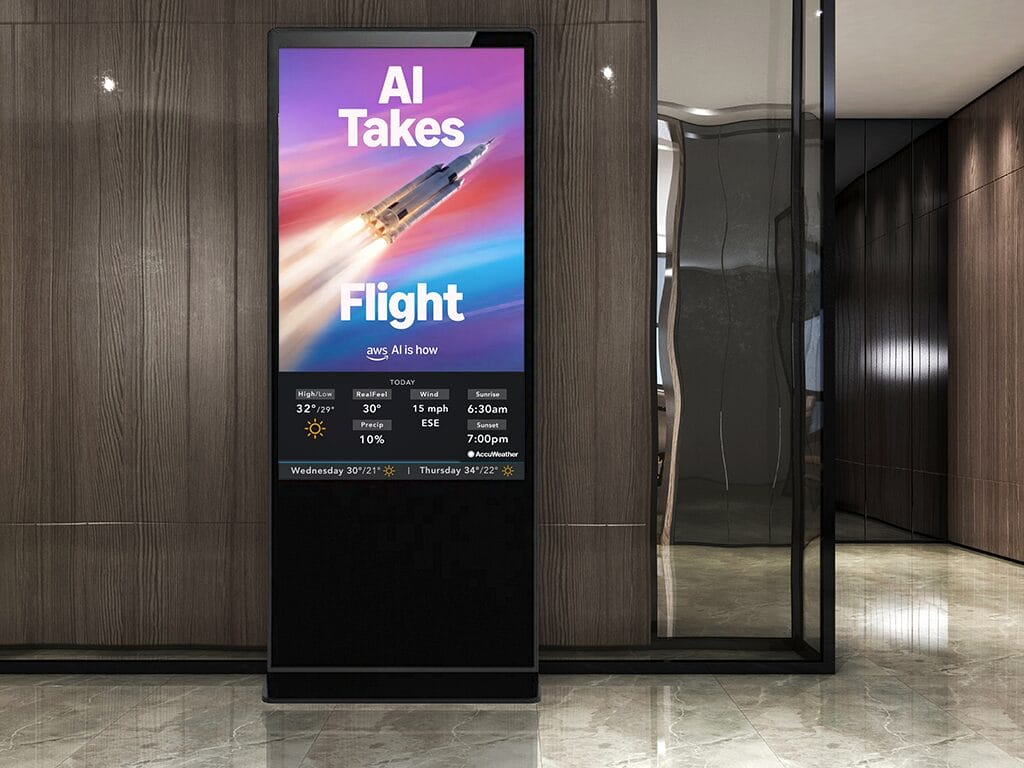
Source: Captivate Residential Survey, MFour Surveys On The Go®, Apr–May 2026 (n=300 U.S. residents per study).
Targeting Opportunities
With Captivate you buy your audience, not just screens. Advanced targeting solutions enable our team to build custom venue lists that deliver the audience you desire.
- Custom audiences built around the consumers that matter most to your brand
- Proximity-based targeting near retail locations and points of interest
- Market-level targeting across 180 DMAs
- Flexible buying: direct or programmatic (PMP, OE, PG)
- Dynamic creative that can be swapped by time of day, venue, market or message
What Are the Top Categories for the Captivate RESIDENTIAL Network?
Because the audience is reached at home where many daily decisions begin and end, the best-performing categories are the ones tied to consumer spending. The following categories are particularly well-suited to reach residents during critical decision-making moments:
- CPG and grocery: weekly shopping lists start at home, and 47% of residents are spending more on groceries than a year ago
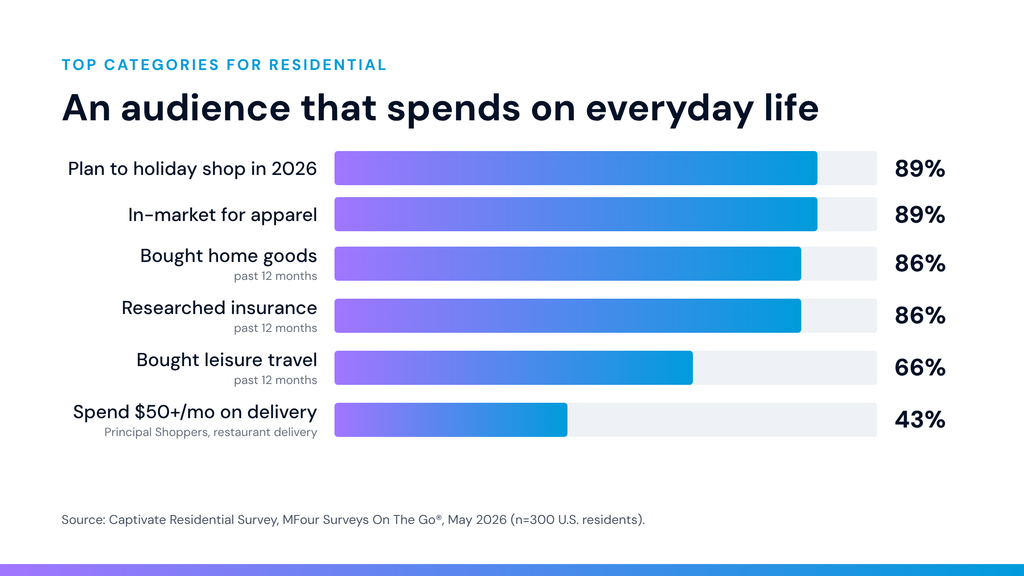
- Food delivery and QSR: dinner decisions get made on the way upstairs; 43% of Principal Shoppers spend $50+ a month on restaurant delivery
- Retail and e-commerce: reach shoppers near stores and in the package room; 89% are in-market for apparel and 86% bought home goods in the past year
- Entertainment and streaming: promote releases right before residents settle in for the night; 96% pay for streaming and 72% pay for music streaming
- Travel: trips are planned at home, often with a partner; 66% bought leisure travel in the past year, and 82% of travelers book within three months
- Beauty, wellness, insurance and financial services: recurring, personal decisions made in private; 86% researched insurance in the past year
What’s the Advantage of Reaching Audiences at Work and at Home?
The consumer journey has changed. Consumers move seamlessly between home, work, mobile devices, retail locations, and digital platforms as they research products, make plans, and complete purchases.
Captivate’s OFFICE and RESIDENTIAL networks help brands stay connected to these moments by reaching the same audiences in two of the environments where they spend the most time.
For brands it might look like this: Influence consumers as they leave home and begin planning their day, reinforce messaging during the workday when decisions and discussions take shape, and reconnect with them when they return home ready to shop, stream, dine, book travel, or make purchases online. Mobile devices naturally bridge these environments, creating a continuous path from exposure to action.
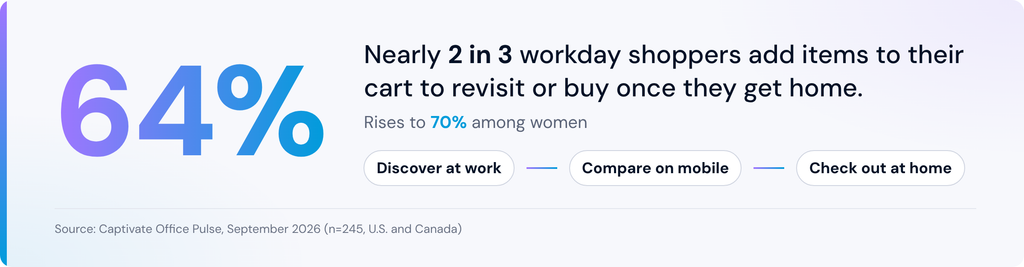
In fact, nearly 2 in 3 consumers (64%) say that when they shop during the workday, they’re likely to put items in their cart to look at again or buy once they get home, rising to 70% among women.
Source: Captivate Office Pulse, September 2026 (n=245, U.S. and Canada).
Captivate reaches this affluent audience in both places. By extending reach across both Captivate’s Office and Residential environments, your brand is present from the first spark of interest to the final decision, and Captivate’s mobile retargeting extension can follow up on the phone, where the purchase often closes.
- Takeaway: Connect with audiences across the two highest-dwell environments where daily routines, plans, and purchases take shape.
Are There Proven Results?
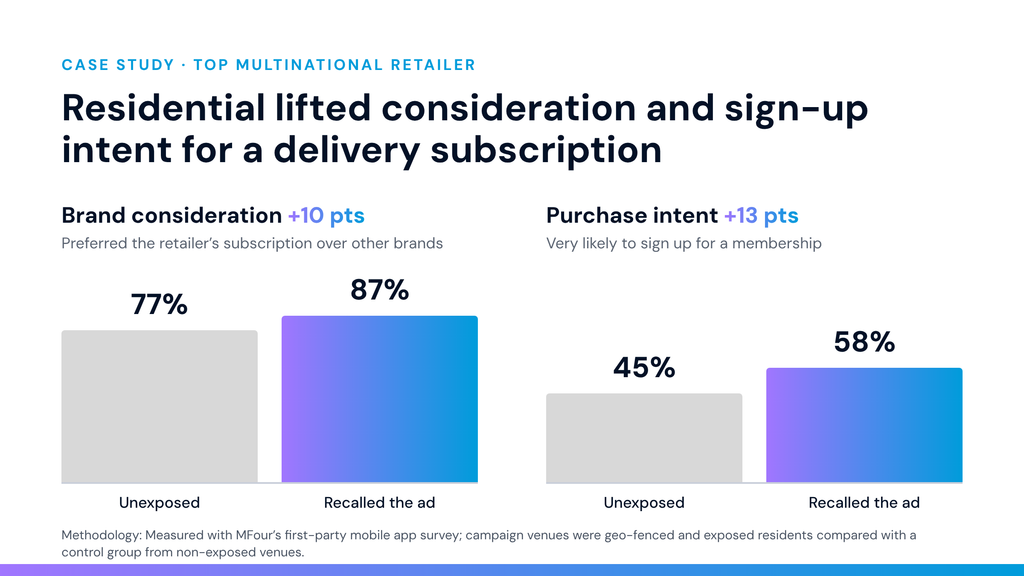
A top multinational retailer partnered with Captivate to boost interest in, and sign-ups for, its delivery subscription service. The campaign ran across Captivate’s Residential network to reach consumers at home, with messaging focused on how fast subscribers receive deliveries, no matter how close they live to one of the retailer’s stores.
Residents who saw and remembered the ads were more likely to choose the retailer’s service and to sign up:
- Brand consideration: 87% of residents who recalled the ad preferred the retailer’s subscription service over other brands, a +10 point lift vs. unexposed residents (77%)
- Purchase intent: 58% of residents who recalled the ad said they were very likely to sign up for a membership, a +13 point lift vs. unexposed residents (45%)
Methodology: Campaign effectiveness measured in partnership with MFour’s first-party mobile app survey. MFour geo-fenced campaign venues to reach users exposed to brand creative and compared them with a control group from non-exposed venues.
Captivate has robust measurement and attribution solutions to measure campaign impact. From custom studies to website lift, store visits, QR code scans and more – you can tie at-home exposure to real-world results.
Reach Premium Audiences At Home
Captivate’s Residential network extends your brand’s influence beyond traditional channels by reaching consumers where purchase decisions begin and end: at home. Whether you want to drive awareness of product launch, build brand loyalty with first-time shoppers, spark the next purchase at the package room or connect the workday to checkout, it starts with being part of their daily routine. The Residential network is a long-dwell, high-attention channel that creates a more connected consumer journey that reinforces messaging, increases touchpoints, and keeps brands top of mind from awareness to consideration to conversion.
Want the full picture? Download our media kit for audience data, market coverage and ad specs, or reach out to our team to start planning your campaign.
Reach Consumers Where They Live
Connect with affluent audiences in premium residential communities and influence decisions closer to purchase. Learn how Captivate’s Residential Network can help you drive awareness, engagement, and measurable results.