
6 Holiday Marketing Strategies to Reach Shoppers Across the Consumer Journey
The holiday shopping journey no longer follows a straight line from advertisement to purchase. Today’s consumers move fluidly between online marketplaces, retailer websites, social media, search engines, physical stores, mobile devices, and fulfillment touchpoints as they research gifts, compare prices, make purchases, and collect orders.
In fact, a shopper may discover a product on social media, research it on their phone at home, compare options during the workday, purchase online, and pick it up from a package pickup location later that week. For marketers, reaching consumers across this connected journey has become essential for holiday success.
For marketers, this evolution requires a shift in thinking. Winning holiday campaigns aren’t built around a single channel or touchpoint. They’re built around the entire consumer journey.
Here are six strategies to help brands stay visible and influential at every stage of the holiday shopping season.
1. Start Holiday Campaigns Earlier Than Ever
Shoppers aren’t waiting until Black Friday or into December to begin their holiday purchasing journey.
Research shows that 25% of consumers start shopping in October and earlier, 18% in November, while another 32% begin on Black Friday and 7% on Cyber Monday. Only 10% wait until December. With 2% who wait until Christmas Week to start making purchases. 6% don’t plan to shop for the holidays at all.
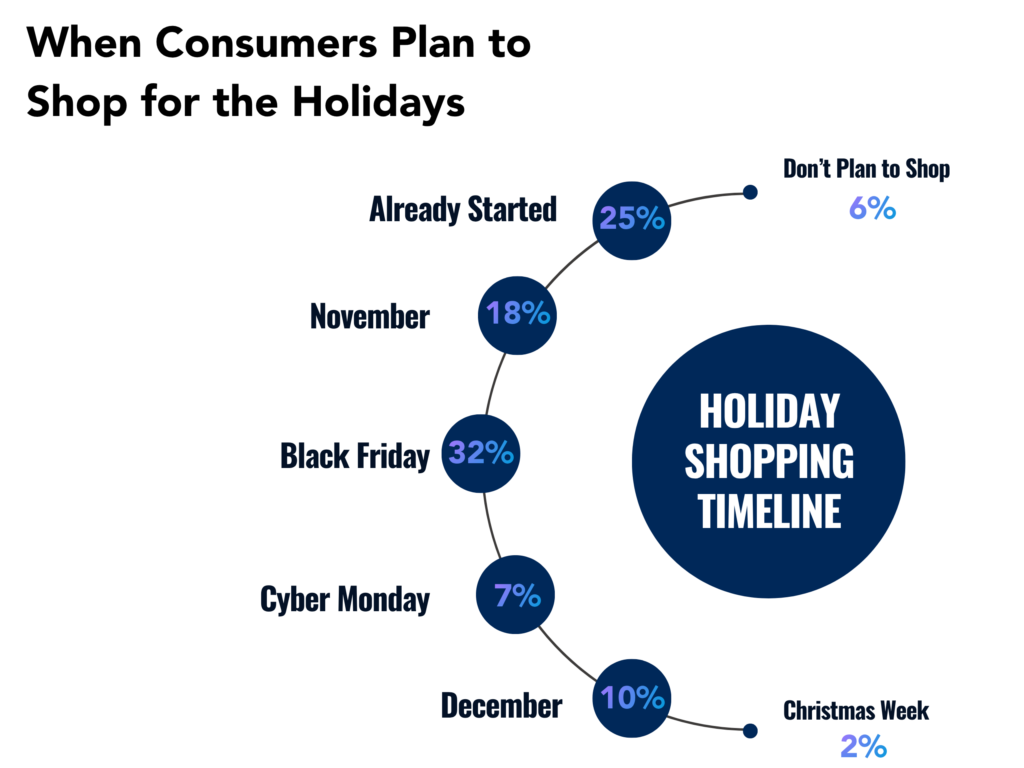
75% of consumers are shopping before or on Black Friday, making early visibility essential for building awareness and consideration before peak promotional periods begin.
Rather than concentrating budgets around a few high-profile shopping days, marketers should consider extending campaigns across a longer planning window. Holiday purchase decisions often begin weeks before transactions occur.
2. Plan for an Omnichannel Holiday Shopper
Consumers aren’t choosing between online and in-store shopping. They’re doing both.
More than half of consumers report increasing their in-store shopping during the holiday season, while 44% say they increase online shopping. The result is a purchase journey that moves seamlessly between digital and physical environments.
More than half of consumers increase in-store shopping during the holidays, while 44% increase online shopping, reinforcing the need for omnichannel strategy that complements all transactions.
This means marketers need to prioritize channels that support the connected e-commerce and brick-and-mortar journey where consumers can discover, research, and purchase products however they prefer.
The most effective holiday campaigns reinforce messaging across multiple environments, ensuring shoppers encounter brands whether they’re browsing online, walking through a retail district, commuting from work, or planning purchases at home.
3. Win the Digital Discovery Moment
Before shoppers make a purchase, they need inspiration. Today’s consumers discover products through a growing number of channels, making awareness more fragmented than ever.
Search engines remain the leading source of product discovery at 66%, followed by word-of-mouth recommendations (60%), online marketplaces (59%), social media (50%), and AI tools (34%).

Consumers rarely encounter a brand in just one place before making a purchase. The path to conversion is increasingly influenced by multiple touchpoints over time.
Holiday campaigns should focus on maintaining visibility throughout the discovery process rather than relying on a single channel to drive results.
The brands that consistently appear across consumer touchpoints are more likely to remain top of mind when shoppers are ready to buy.
4. Reach Shoppers During High-Dwell Moments at Home and Work
While consumers discover products across many channels, significant portions of their shopping journey unfold in the environments where they spend the most time: home and work.
Devices Used for Online Shopping:
- Mobile: 71%
- Personal Laptop/Desktop: 64%
- Work Laptop/Desktop: 44%
- Tablet: 29%
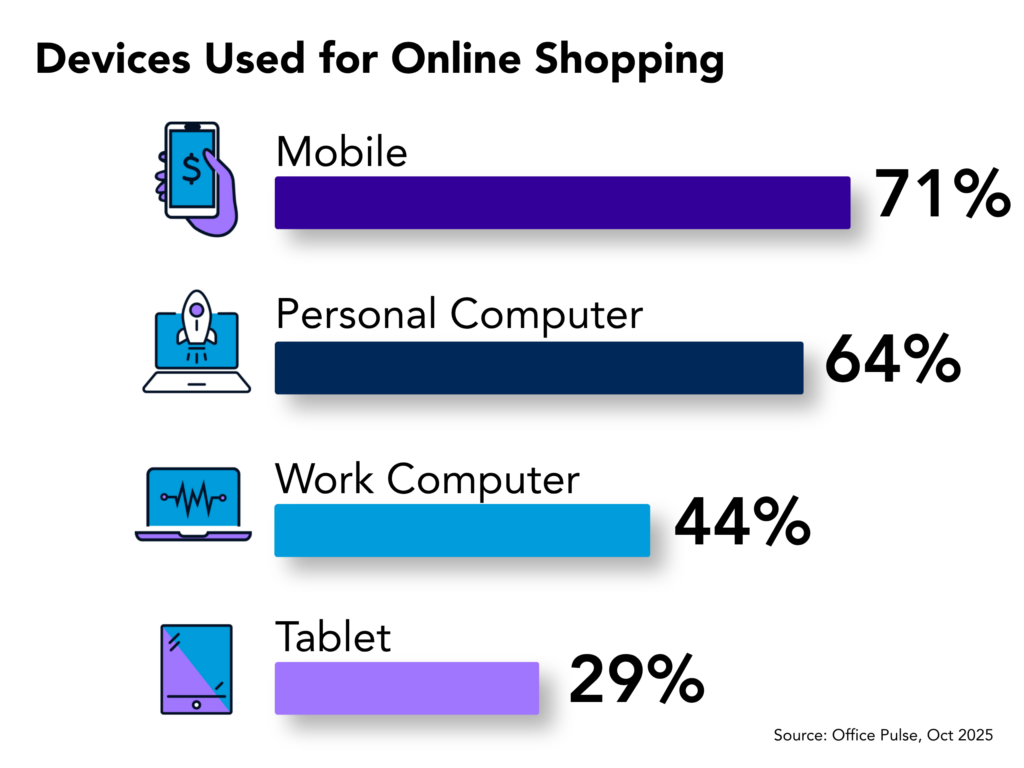
Consumers are also increasingly blending shopping into their workday routines.
More than 80% of consumers shop online during or after the workday, while many continue shopping after work hours when they have more time to research products, compare prices, and make purchasing decisions. Shopping during the workday: online (35%), in-store (22%), and household goods (17%). Shopping after the workday: online (66%), in-store (43%), and household goods (62%).
| During Workday | After Workday | |
| Online Shopping | 35% | 66% |
| In-Store Shopping | 22% | 43% |
| Household Goods Shopping | 17% | 62% |
For marketers, these environments represent valuable high-dwell moments where consumers are actively engaging with content, planning purchases, and progressing through the shopping journey.
Home and workplace media environments help reinforce brand messaging during critical research and consideration phases, complementing both online and in-store purchasing behavior.
5. Extend Visibility Beyond Checkout with Package Pickup Touchpoints
Holiday shopping doesn’t end when consumers place an order. In many cases, that’s when the next stage of the customer journey begins. As online shopping continues to grow during the holiday season, consumers are increasingly interacting with fulfillment environments through home deliveries and package pickup locations, making fulfillment a natural extension of the shopping experience.
Nearly 80% of consumers purchase through online marketplaces, and 63% buy directly from retailer websites. As these online purchases move through the fulfillment process, shoppers remain engaged with their buying decisions, tracking deliveries, collecting packages, managing returns, and in many cases adding more items to their holiday shopping lists.
For marketers, this presents an opportunity to think beyond the transaction. Consumers don’t simply disengage once a purchase is complete. Instead, they remain connected to the shopping journey through anticipated deliveries, gift planning, product returns, and additional purchases. These post-purchase moments can help reinforce brand awareness and maintain relevance while shopping is still top of mind.
Package pickup environments provide a unique bridge between digital transactions and real-world engagement. Whether consumers are collecting holiday gifts, everyday essentials, or recent purchases, these moments create opportunities to reinforce brand messaging in a context that is closely tied to shopping behavior. As a result, these environments create opportunities for brands to extend visibility beyond purchase and remain present throughout the broader consumer journey.
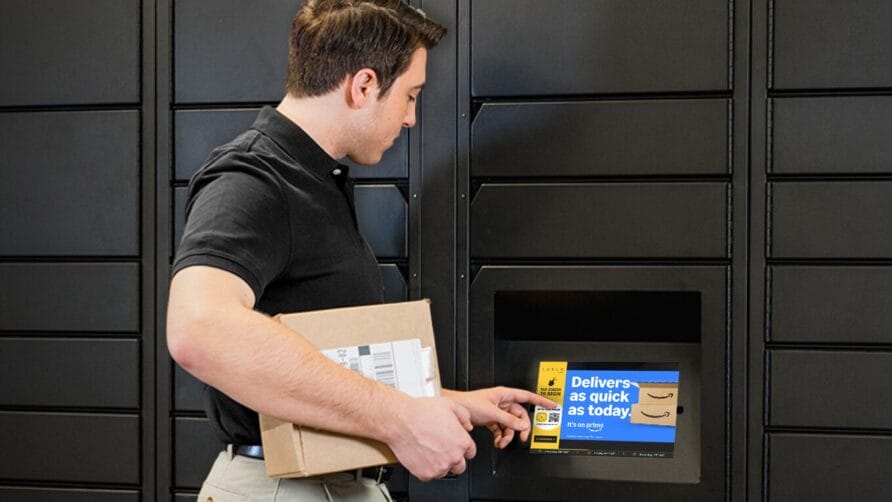
The consumer journey doesn’t stop at purchase. As fulfillment becomes an increasingly important part of holiday shopping, package pickup touchpoints offer brands another opportunity to stay visible and engaged through the final stages of the shopping experience.
Discovery. Consideration. Purchase. Fulfillment. Today’s holiday consumer journey includes multiple moments that influence brand perception, making post-purchase engagement an increasingly valuable part of the marketing mix.
6. Stay Visible Near the Point of Purchase
While digital shopping continues to grow, in-store shopping remains a critical component of holiday spending – especially for busy professionals. Consumers frequently shop along their existing routines, including commuting, lunch breaks, after-work errands, and planned retail visits.
Research shows that 2 in 5 professionals say they visit nearby stores after seeing an advertisement that interests them. Beyond the 39% who are likely to take action, another 36% are neutral, representing a sizable audience that may be persuaded by relevant messaging delivered at the right moment. With only one-quarter of consumers unlikely to visit, the findings suggest that advertising near purchase opportunities can influence store consideration and help move shoppers closer to conversion.

The finding highlights the importance of proximity-based advertising during the holiday season. When consumers are already near shopping destinations and ready to act, relevant messaging can help move them from consideration to purchase.
Key Takeaway: Nearly four in ten consumers say advertising can influence a visit to a nearby store, demonstrating the power of reaching shoppers close to the point of purchase.
Meeting Holiday Shoppers at Every Stage of the Journey
The modern holiday shopper moves seamlessly between digital discovery, mobile research, workplace influences, online marketplaces, retailer websites, fulfillment experiences, and physical stores.
For marketers, that means holiday success requires more than a strong Black Friday promotion or a well-executed digital campaign. It requires a strategy that reflects how consumers actually shop today.
The most effective brands will start early, maintain visibility across channels, connect online and offline experiences, and engage consumers throughout the entire purchase journey, from initial inspiration to final delivery.
As marketers finalize their 2026 holiday plans, the opportunity is clear: build campaigns around the way people shop now, not the way they shopped in the past.
Plan Smarter Holiday Campaigns
The holiday season starts long before Black Friday. Discover the consumer insights and shopping trends that can help you build a campaign strategy that reaches shoppers early and often. Talk to our team today.