
Digital Signage Content Strategy for Commercial Buildings: What to Show and How Often
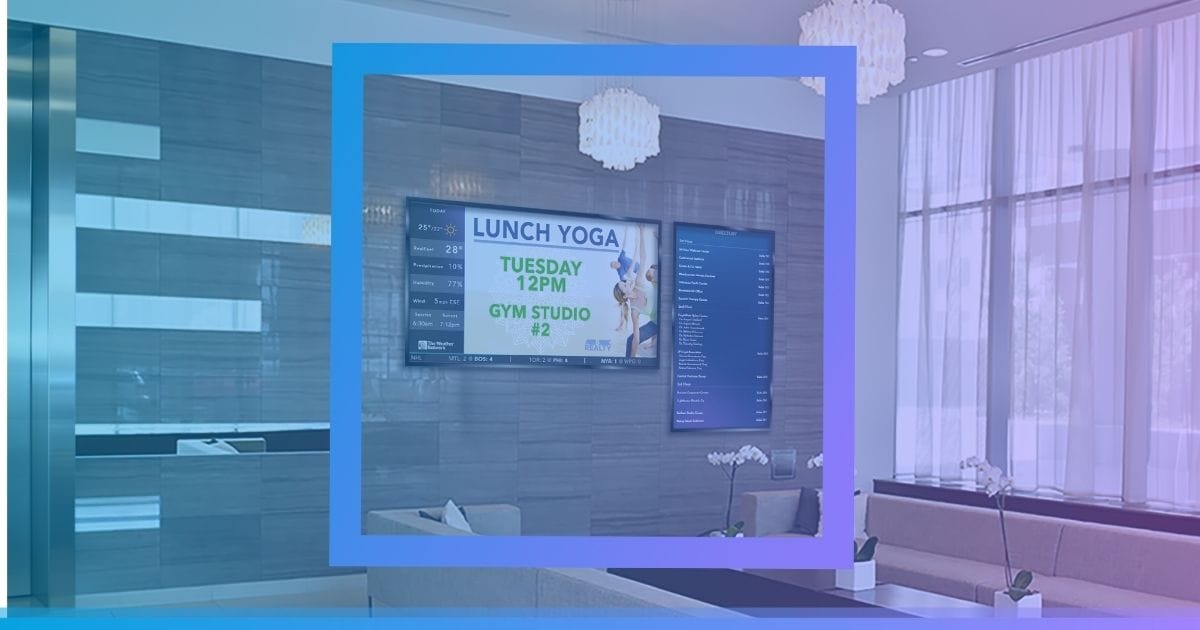
Installing digital screens in an office building is only the beginning. What appears on those screens, how relevant it is to the people seeing it, and how often it changes determine whether digital signage becomes a valued part of the building experience or another fixture tenants learn to ignore.
A thoughtful digital signage content strategy gives every screen a purpose. Building announcements keep tenants informed. News, weather, and transit updates add everyday utility. Amenity promotions and event reminders help people take advantage of what the property offers. Together, that mix can turn lobby and elevator screens into a communication channel tenants come to rely on.
For commercial real estate owners and property managers, the challenge is maintaining that value without creating another time-consuming task for the property team. The right approach combines timely building communication with professionally curated content and a clear system for managing updates, so screens remain useful without requiring constant hands-on attention.
Why Office Buildings Need a Digital Signage Content Strategy
Office tenants already have plenty competing for their attention. Email inboxes are crowded. App notifications pile up. Printed notices can easily blend into the background.
Captivate research illustrates why relying too heavily on any one of those channels can leave a communication gap. When CRE tenants were asked to rank their preferred methods for receiving building communication, email came in at 58%, app notifications and text messages at 55%, and digital signage close behind at 53%. Yet only 20% of property managers rated digital signage as highly effective. That 33-point difference suggests that tenants may place considerably more value on the channel than property teams realize.
The opportunity is to use each channel where it makes sense. Email still has a role for formal or detailed communication. Apps and texts can help with urgent notifications. Digital signage provides an in-building communication layer for the information people can absorb as they move through their normal workday.
Lobby and elevator screens are particularly well suited to this role because they reach people in the physical environment the message concerns. A reminder about a tenant event can appear as employees arrive for work. A maintenance update can run near the affected area. Weather or transit information can be available as people prepare to leave for the day.
That relevance is what helps a screen become part of the building experience. When tenants know they can glance at a display for something timely or useful, they have a reason to keep looking. Building messages benefit from that attention, too.
The goal, then, is not simply to keep a screen filled. A strong digital signage content strategy should inform tenants, give them useful reasons to engage and contribute to a more polished, connected property experience.
What Makes Office Building Digital Signage Effective?
Effective office building digital signage starts with usefulness. The content should reflect what tenants need to know, what is happening in and around the property, and what is relevant at that moment in their day.
Quality matters as well. A premium office lobby can quickly lose some of its polish when a sophisticated display is running outdated announcements, poorly formatted graphics, or the same limited playlist week after week. The on-screen experience should feel considered and consistent with the property around it.
Strong programs generally share a few characteristics: timely property information, consistent visual standards, a reliable process for publishing and removing messages, and enough variety to keep the experience fresh between building announcements.
Curated content can help provide that variety. Captivate blends custom property messaging with professionally curated news, weather, business, lifestyle, and other content, giving tenants a reason to pay attention even when there is no new building announcement to share.
Just as importantly, managing that programming should not become another full-time responsibility for property teams. A managed digital signage program can handle the ongoing content layer while giving building management control over the property-specific information only they can provide.
The Core Content Categories Every Office Building Should Consider
There is no universal formula for what percentage of screen time should go to each type of content. A downtown office tower with heavy commuter traffic will have different needs from a suburban campus with extensive on-site amenities.
A more practical approach is to build a content system around several core categories and adjust the mix according to the property, audience, and time of day.
| Content Category | Purpose | Example Content | Best Screen Location | Update Frequency |
| Building operations | Keep tenants informed about property activity | Maintenance, elevator updates, access changes | Elevators, lobbies, common areas | As needed |
| Amenities and services | Increase awareness and usage | Fitness center hours, food service, bike storage | Lobbies, elevator banks, amenity areas | Weekly or as details change |
| Events and community | Encourage participation and connection | Tenant events, wellness programming, seasonal activities | Lobbies and elevators | Weekly, with increased frequency near the event |
| News and lifestyle | Keep screens useful and engaging | Business, world, sports and lifestyle stories | Lobbies and elevators | Throughout the day |
| Weather and transit | Add practical, location-relevant utility | Forecasts, traffic and transit information | Lobbies and exit areas | Real-time or throughout the day |
| Safety and urgent communication | Deliver high-priority information quickly | Fire drills, closures, emergency instructions | All applicable screens | Immediately |
Building Operations and Announcements
Some of the most valuable content is also the most practical.
Maintenance schedules, elevator service notices, temporary entrances, construction updates, cleaning information, and changes to building access can all be communicated through office building digital signage.
These messages work best when they are concise and specific. Tenants passing a screen should be able to understand the essential information within a few seconds. If more detail is required, the display can point tenants to another building communication channel for the full explanation.
Timing is equally important. Operational messages should appear early enough to be useful and come down once they are no longer relevant. A notice about work completed three days ago makes the entire screen feel less current.
Amenities and Tenant Services
Office properties invest in amenities to improve the workplace experience, but those amenities only provide value when tenants know they exist and understand how to use them.
Lobby digital signage and elevator digital signage can highlight fitness centers, conference spaces, food service, bike storage, wellness programs, tenant lounges, concierge services and other property offerings.
Content can also help tenants discover features they may have overlooked. Instead of simply listing every amenity indefinitely, property teams can rotate timely reminders throughout the year, highlight specific services when they are most relevant and promote changes in hours or availability.
This is also an opportunity to reinforce the investment a property is making in its tenants. A building with a full calendar of programming and amenities should make those benefits visible.
Events and Community Programming
Tenant events can help create a stronger sense of community, but turnout depends in part on awareness.
Digital signage can support event promotion throughout the full lead-up period. An upcoming wellness class might first appear a few weeks in advance, return more frequently as the date approaches, and switch to a final reminder on the day of the event.
Property teams are already using Captivate ScreenCenter™ for messages promoting everything from fitness and wellness programming to food trucks and tenant gatherings.
The same approach can work for holiday activities, charitable initiatives, building activations, tenant appreciation events, and other programming that gives people more reasons to participate in the property community.
Curated News, Business, Sports and Lifestyle Content
Building messages are important, but they generally are not frequent enough to sustain an engaging digital experience on their own.
Professionally curated content fills that space with information tenants may find useful or interesting throughout the workday. Captivate’s programming includes content from more than 200 trusted providers, spanning news, weather, business, lifestyle and other categories.
For office environments, curation is particularly important. Random feeds can make a premium screen feel disconnected from the audience and the building around it. Content should be appropriate for a professional setting, brand safe, current and selected with the viewer in mind.
That creates a more consistent reason to look at the screen, which can also increase visibility for the building communications running alongside it.
Weather, Traffic and Transit
Some content earns attention simply because it is useful.
Local weather, traffic and transit information can help tenants plan the next part of their day without opening another app or searching for an update. Its value also changes naturally throughout the day. A morning forecast may help someone plan lunch or an afternoon meeting, while transit information becomes particularly useful as the workday winds down.
For lobby digital signage near exits and elevator banks, these updates can make the screen feel connected to what tenants are doing at that exact moment.
Safety and Emergency Messaging
When an urgent situation arises, speed and visibility matter.
Digital screens can support broader emergency communication plans by displaying safety notices, security information, weather warnings, fire drill instructions, evacuation plans, or other time-sensitive alerts in prominent areas of the property.
Captivate ScreenCenter™ includes emergency alert functionality that allows property teams to override regular programming when an urgent message needs immediate visibility.
Emergency content should always be clear, direct, and limited to the information people need to understand what is happening and what action they should take.
How Often Should Digital Signage Content Be Updated?
There is no single refresh schedule that works for every type of content. The better question is how long a message remains useful.
Real-time information such as weather, traffic, transit, and urgent alerts needs to reflect current conditions. Operational notices should change whenever the underlying building information changes. Event promotions can stay in rotation longer, but the messaging should evolve as the event approaches.
Amenities, services, and evergreen property information may remain relevant for weeks or months, although the creative can be rotated periodically to prevent it from becoming invisible through repetition. Seasonal content should follow the building calendar and be removed promptly once the moment has passed.
A simple rule can keep the entire program on track: every message should have a reason to be on the screen today.
That does not mean property managers need to manually replace content every morning. Scheduling tools can automate much of the work. A message can be prepared in advance, programmed to appear on specific dates or screens, and set to expire when it is no longer relevant.
The curated portion of the experience can be managed separately by a digital signage partner, giving tenants a continually refreshed programming mix without adding another editorial calendar to the property team’s workload.
Match the Content to the Screen and the Moment
A content strategy should also account for where a screen appears and how people encounter it.
Elevator screens are viewed at close range during a natural pause in the day. They are well suited to concise building updates, news, weather, event reminders, and other content tenants can absorb quickly.
Lobby screens often have different viewing conditions. People may see them from farther away or while walking through the space, which makes clear headlines and strong visuals especially important. Large-format displays can also play a greater role in reinforcing the property brand and creating a polished arrival experience.
Screens near exits are natural places for weather, traffic, and transit information. Displays near amenity spaces can feature programming specific to those areas.
This is where the broader strategy becomes more precise. The same message does not have to appear everywhere simply because every screen belongs to the same network. Content can be selected according to who is likely to see it, where they are seeing it and what will be useful in that context.
Build a Content Calendar Without Creating More Work
A basic content calendar can give property teams enough structure to keep messaging current without turning digital signage into another complicated workflow.
Start with predictable building activity: planned maintenance, recurring tenant programming, seasonal moments, amenity promotions, and known operational updates. Schedule those messages in advance whenever possible.
Then leave room for timely communication. An elevator outage, weather event or last-minute building update cannot always be planned weeks ahead, so property teams need a straightforward way to publish quickly when circumstances change.
Captivate ScreenCenter™ gives property teams a cloud-based portal for creating, scheduling and publishing custom building announcements, with templates and branding options that can help maintain consistency.
The property team can focus on the information unique to the building while Captivate’s editorial team manages the professionally curated programming that surrounds it. That division of responsibility helps screens remain fresh without asking property managers to become content programmers.
Common Digital Signage Content Mistakes to Avoid
Even a well-designed digital signage network can lose effectiveness when the content becomes an afterthought.
One common problem is leaving expired messages on screen. An old event promotion or outdated maintenance notice signals that the display cannot be trusted for current information.
Another is overcrowding the screen. Tenants in lobbies and elevators generally have a limited window to absorb a message. Long paragraphs, multiple competing calls to action and overly detailed graphics make that harder.
Repetition can be just as damaging. When tenants see the same handful of messages every day, they have little reason to continue paying attention. A broader mix of useful building information and fresh curated programming helps prevent that fatigue.
Finally, avoid treating every screen exactly the same. A message that makes sense at an elevator bank may have little value in another part of the property. Location, audience and timing should all influence what appears where.
A Better Screen Experience Starts With Better Content
Commercial building digital signage can do far more than replace a printed notice board. With a thoughtful content strategy, it becomes part of how tenants experience the property every day.
The strongest programs combine information people need with content they choose to notice. They keep messages timely, match content to the environment and give property teams the flexibility to communicate quickly without asking them to manage an entire media operation.
Captivate brings those pieces together through professionally curated content, custom property messaging, ScreenCenter™, and digital signage solutions designed for office lobbies, elevators, and shared spaces. The result is a screen experience that keeps tenants informed while helping the property feel current, connected, and thoughtfully managed.
Explore Captivate’s commercial real estate digital signage solutions to see how a managed content strategy can help inform, engage, and elevate your building.